
Seeds vs Starter Plants: What Actually Works in a Backyard Garden
Discover what works best when building a backyard vegetable garden from scratch. Real lessons on seeds, starters, and propagation.
Seeds vs Starter Plants: What Actually Works in a Backyard Garden
Starting a backyard vegetable garden saves money and brings fresh food to your table. But beginners often get stuck choosing between buying seed packets or purchasing established starter plants. You want to make the right choice before wasting time and money at the store.
I manage a spacious vegetable garden right in my Florida backyard. Over the seasons, I experimented with both methods across ten different crops. Some plants thrive when thrown into the dirt as tiny seeds. Others need a head start, or they won’t survive the intense local humidity and pests.
Here is exactly what worked, what failed, and how I grew each vegetable in my garden patch.
The Direct Seed Successes: Lettuce and Carrots
Some vegetables hate being moved. If you buy them as starters, the stress of transplanting often stunts their growth or kills them outright. For these crops, planting seeds directly into your garden bed is the only way to go.
Loose Leaf Lettuce
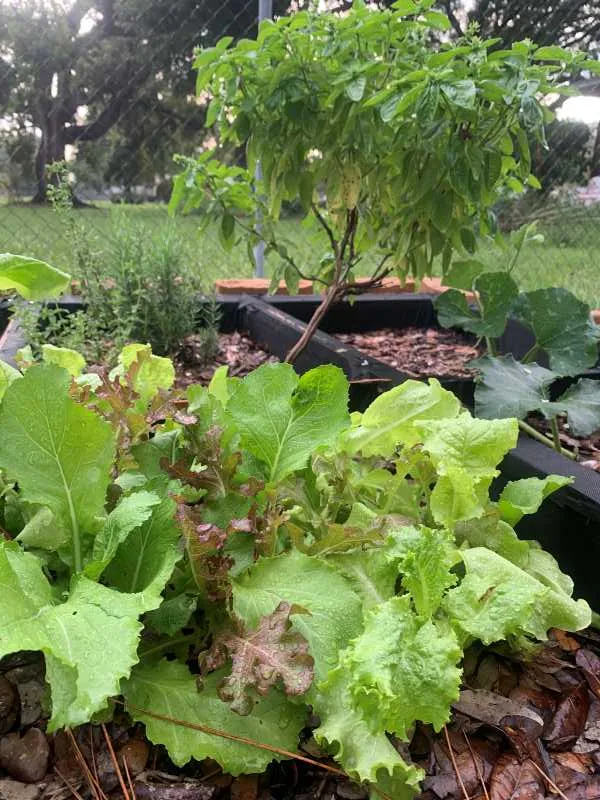
I grew my lettuce entirely from seeds. Lettuce seeds are tiny, so you just scatter them lightly over loose soil and press them down gently. In our warm climate, you need to harvest them while the leaves are young. If you let them grow too long, the heat makes them incredibly bitter. It grows fast, so seeds are definitely the cheapest path here.
Carrots
Carrots must always be grown from seed. If you try to transplant a starter carrot plant, you disturb the main taproot, resulting in deformed, twisted vegetables. I sowed my carrot seeds in deeply loosened, sandy soil. I managed to get a beautiful harvest from them, though I only collected some carrots before the heat took them. After that successful harvest, the lifecycle ended and the plants naturally died off, which aligns with standard biennial growth patterns studied by the University of Florida IFAS Extension.
The Store-Bought Starters: Basil and Rosemary
For slow-growing herbs, skipping the seed phase saves you months of waiting. Buying small starter plants gives you an instant harvest and a much higher success rate against backyard pests.
Basil
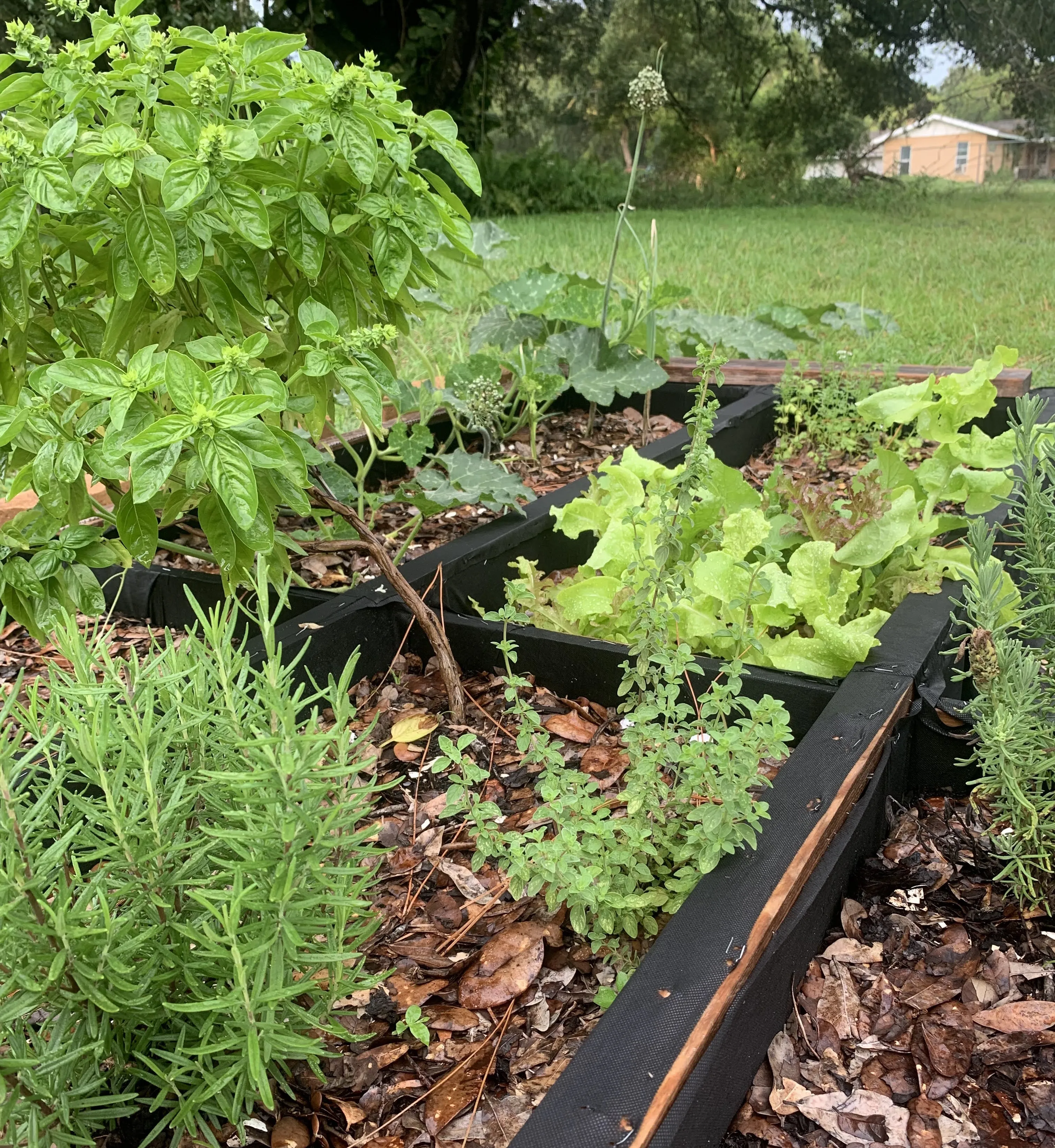
I bought a very small basil starter plant on Amazon to get a head start. I must say, I was absolutely impressed with its growth. It took off so fast. Soon, the main stem began to get woody and tough. It looked less like a temporary herb and more like a small tree. I absolutely love this plant. I constantly pinch off the top leaves to keep it from flowering, which keeps the leaves tasting sweet.
Rosemary
Rosemary takes forever to germinate from seed. It can take up to a month just to see a tiny green speck in the dirt. I avoided that headache by purchasing a small live rosemary starter plant instead. I adore this plant. It has so many uses, and I find myself using it constantly in the kitchen. My husband is especially obsessed with it, always using fresh rosemary whenever he cooks meat. It is a permanent fixture in my garden.
The Propagation Shortcut: Green Onions and Sweet Potatoes
You don’t always need to buy seeds or plants. Some of the most resilient crops in my garden came from grocery store scraps and water propagation.
Green Onions
Regrowing green onions is the easiest garden project you can do. I took standard store-bought green onions, used the green tops for cooking, and placed the white root bases into a small glass of water. Within days, new roots sprouted. I transferred them into the ground, and they expanded into an endless supply. You just snip what you need, and they grow right back.
Sweet Potatoes
My sweet potato vine is one of the oldest and most stubborn plants in my entire backyard garden. I started this by suspending a sweet potato in water until it sprouted roots and shoots. Then, I planted those shoots into the ground.
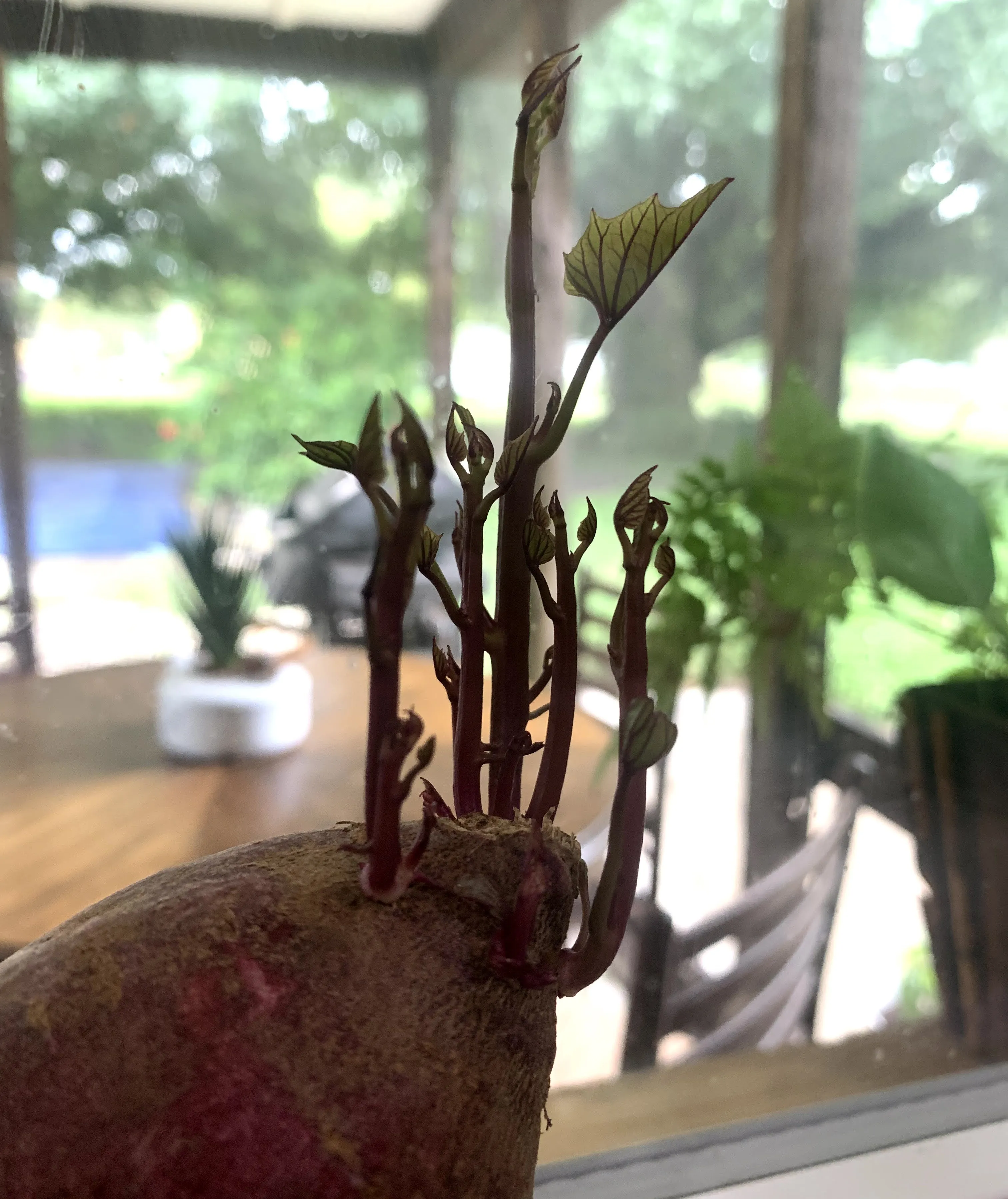
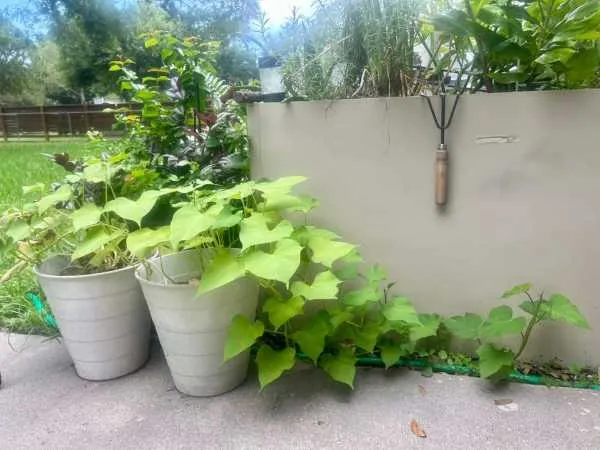
It grows like a wild groundcover. I know that sweet potato leaves and shoots are entirely edible and highly nutritious, though I haven’t personally tried eating the greens yet. Underneath the soil, it builds a massive root system. I harvest the mature potatoes from the dirt, leave the vines intact, and the plant just keeps producing new crops season after season.
The Difficult Herbs and Garden Failures
Not everything goes smoothly when dealing with natural elements, unexpected pests, and tricky watering schedules.
Cilantro
I planted my cilantro from seeds, but it turned out to be an incredibly difficult plant to care for. I particularly couldn’t get the watering right. I didn’t accept or balance its moisture needs properly, and it didn’t take long for the plants to wither and die. If you don’t nail the moisture balance, cilantro fails quickly.
Oregano
My oregano came to me as a gift. A friend handed me a tiny, fragile starter plant from their own collection. I tucked it into a sunny corner of my vegetable garden, and it completely took off. Oregano functions as a hardy groundcover. It handles the harsh afternoon sun beautifully and requires minimal watering once established.
Squash
Every garden has a tragedy. In mine, it is squash. I planted squash from seed multiple times. The vines grow aggressively at first, and I even see the tiny fruits start to form. Then, disaster strikes. The high humidity causes the stems to rot, or local insects chew through the base of the vine. Sometimes the young fruit simply turns to mush and rots right on the vine before it can mature. Some bugs always eat it before I can harvest a single thing.
Moving Past the Basics
Beyond these standard garden crops, there is also okra. I planted okra through seeds, and it did amazingly well. However, I want to talk about it in a completely separate article. It deserves its own space because I want to highlight its beautiful flowers, my successful harvest, and a wonderful recipe for ground beef with okra that I make.
If you want to keep your garden simple today, stick to root-propagated green onions, direct-sown lettuce, and pre-grown herb starters like rosemary. Skip the squash seeds unless you have the patience to fight off pests every single morning.