
No, it’s not a pond: Discovering dozens of goldfish in my swimming pool
We bought a house and found a thriving ecosystem with goldfish living under the abandoned pool cover. Read the true story of this backyard rescue.
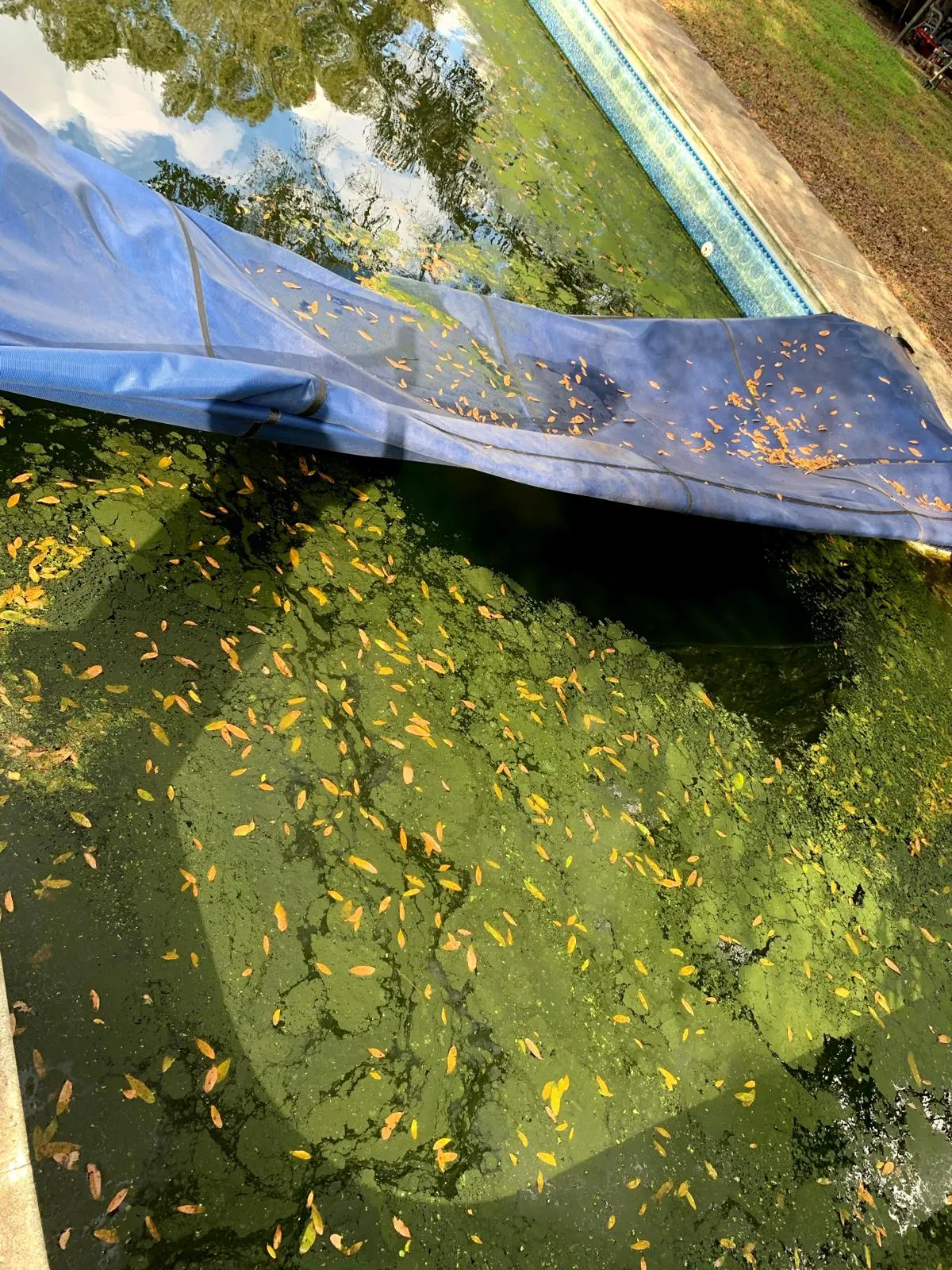
When we signed the papers for our new house, we knew there would be a lot of work ahead. In the backyard, a blue tarp specifically designed to cover the pool was tensioned tight, hiding the entire structure. Since our budget was tight, our initial strategy was to ignore the backyard and focus on the internal priorities of the house.
Everything changed a few days after we moved in. Our neighbor came over to tell us that the previous owner simply had no way to take his fish with him and decided to leave them at their own risk in the pool.
My immediate reaction was pure curiosity. I wanted to pull back the pool cover as soon as possible and make sure there were actually fish in there.
The surprising discovery of an isolated ecosystem
The scene resembled a swampy, forgotten pond. There was a lot of slime, dirt accumulated around the edges, branches, plants, frogs, and other small organisms.
Despite the dirty appearance, the water had no bad smell. Suddenly, quick movements and flashes of light began to appear on the surface. We pulled the cover back further and were in complete shock. There were so many fish.
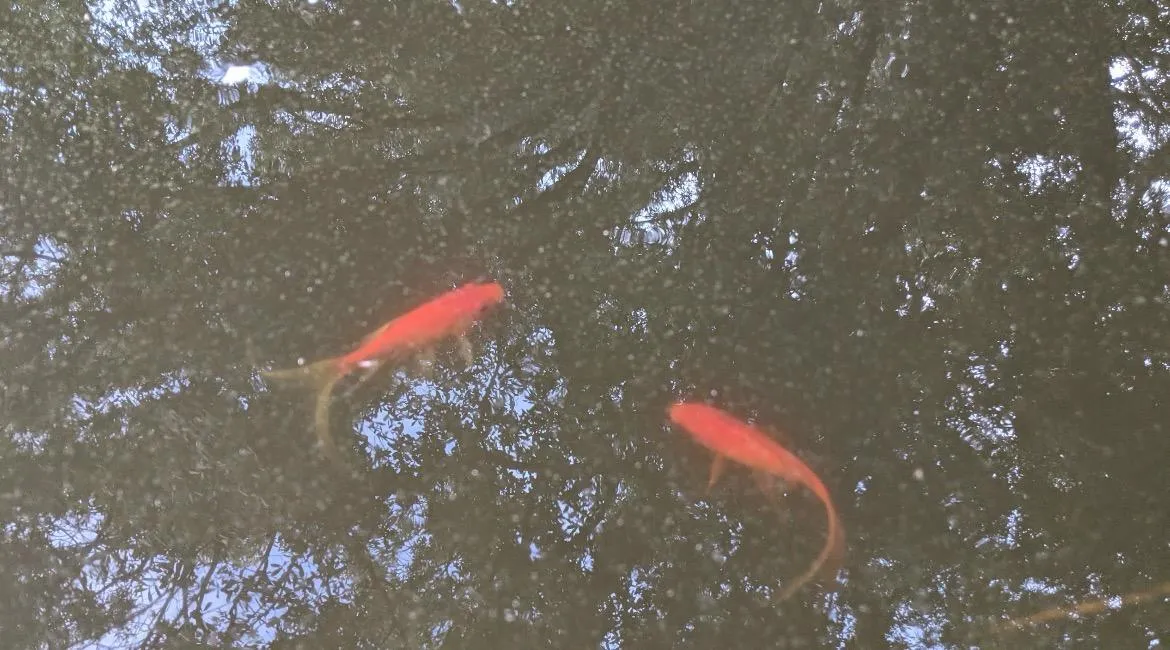
The neighbor estimated that there were around 50 fish in total. Looking from above, it was hard to pin down the exact number due to the constant movement, but the population was large. All of them were goldfish, with sizes ranging from small, medium, and large. The colors varied between vibrant gold, deep red, and some with white spots.
They swam with extreme agility in that chaotic environment. We were fascinated by how that ecosystem functioned all by itself. The fish didn’t receive food from anyone. They survived by consuming insect larvae, frog eggs, and the organic matter that was already in the water. Nature found a way to thrive in our backyard without any human interference.
Four years as the main attraction of the house
Our financial priorities kept weighing on us, which made us leave the pool untouched for almost four years. During all this time, the fish became the main attraction of the property.
Whenever we had friends or family visiting, the routine was always the same. We would take everyone to the backyard, pull back the cover, and reveal the biological secret of the house. To interact with them, we started throwing a little food every now and then, just for fun, though they clearly didn’t depend on it. Here are the main characteristics of that environment before our intervention:
- Water quality: No unpleasant odors, with a highly stable natural biological balance.
- Single species: A population composed exclusively of goldfish.
- Diet: Based purely on spontaneous local fauna, such as insects and amphibians.
- Life cycle: The animals continued to develop and multiply right under that tarp cover.
It was fascinating to notice that they remained healthy and fine in there, completely oblivious to the outside world. Regardless of the weather, whether it was extreme heat or the occasional cold snaps we get for a few days here in Florida, they endured those climate shifts like true wild creatures.
Planning the renovation and the fate of the fish
Time passed and the conversation about restoring the pool began to take shape. We researched contractors, checked if the pump system and infrastructure were working, and analyzed our options for the liner, weighing whether concrete or vinyl would be best. There were many technical details to solve, but the topic we talked about the most during family meetings was what we were going to do with the fish.
Our main focus was saving that population of animals we had accidentally adopted. We couldn’t just drain the water and discard the living creatures that had given us so many stories over the last few years.
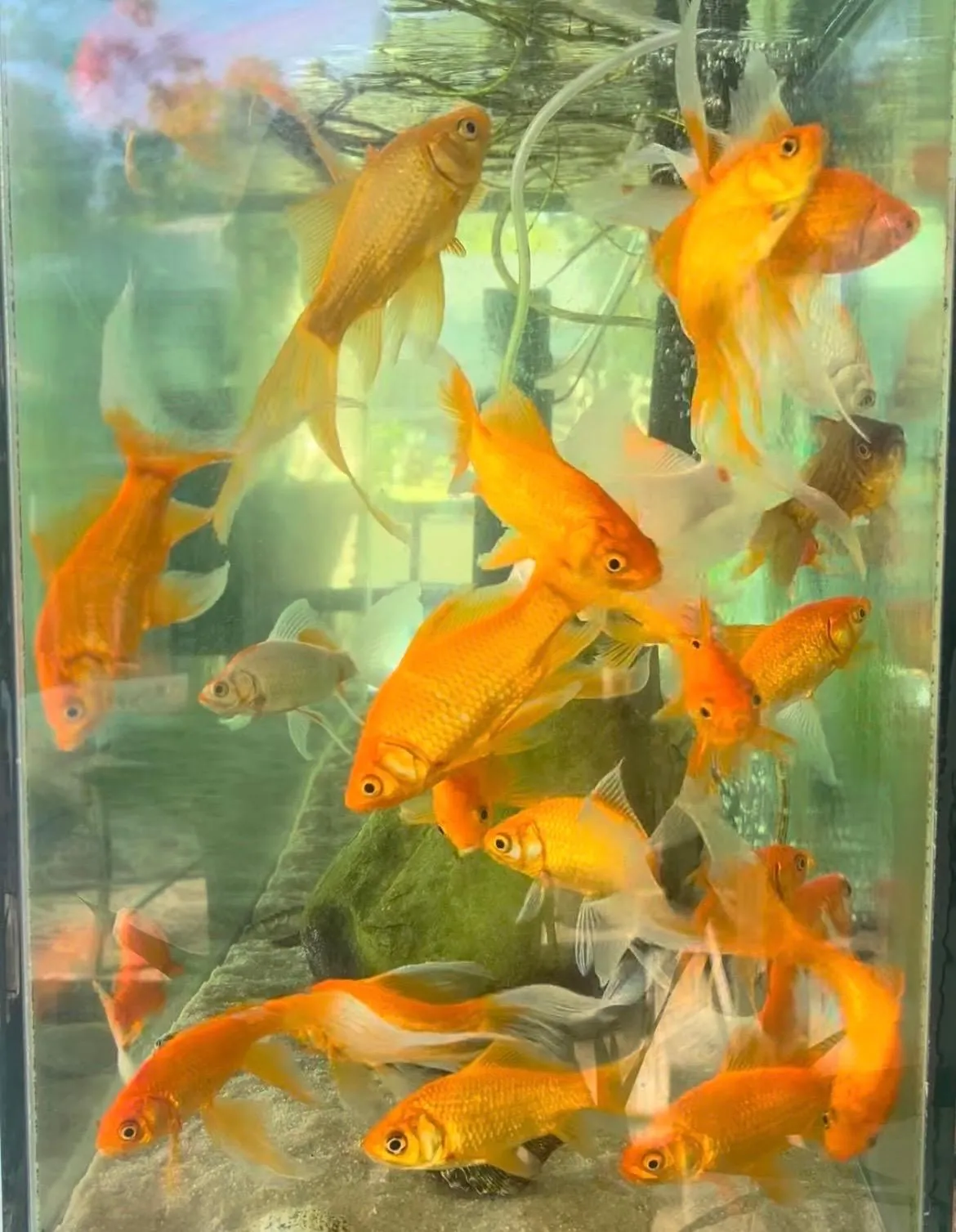
Planning the destination for the animals required some creativity. I remembered a relatively large aquarium that had been cluttered inside our shed for years. I had already tried to sell this item on Facebook Marketplace several times, but a buyer never showed up. The huge glass tank ended up forgotten in a corner of the tool shed, gathering dust.
That ignored item became the perfect solution. The old aquarium would be cleaned and prepared to become the new permanent home for the fish, serving as a central piece of decor on our back porch.
The challenge of the muddy rescue
We hired a specialized professional to start the heavy cleaning of the structure. The initial strategy seemed simple on paper: install a submersible pump to drain the water gradually, making it easier to catch the animals with nets as the level dropped.
The practical reality turned out to be a logistical nightmare. The fish were extremely fast, smart, and perfectly adapted to that murky environment. They developed a sharp escape instinct over years of isolation. It seemed like they didn’t want to leave that place at all.
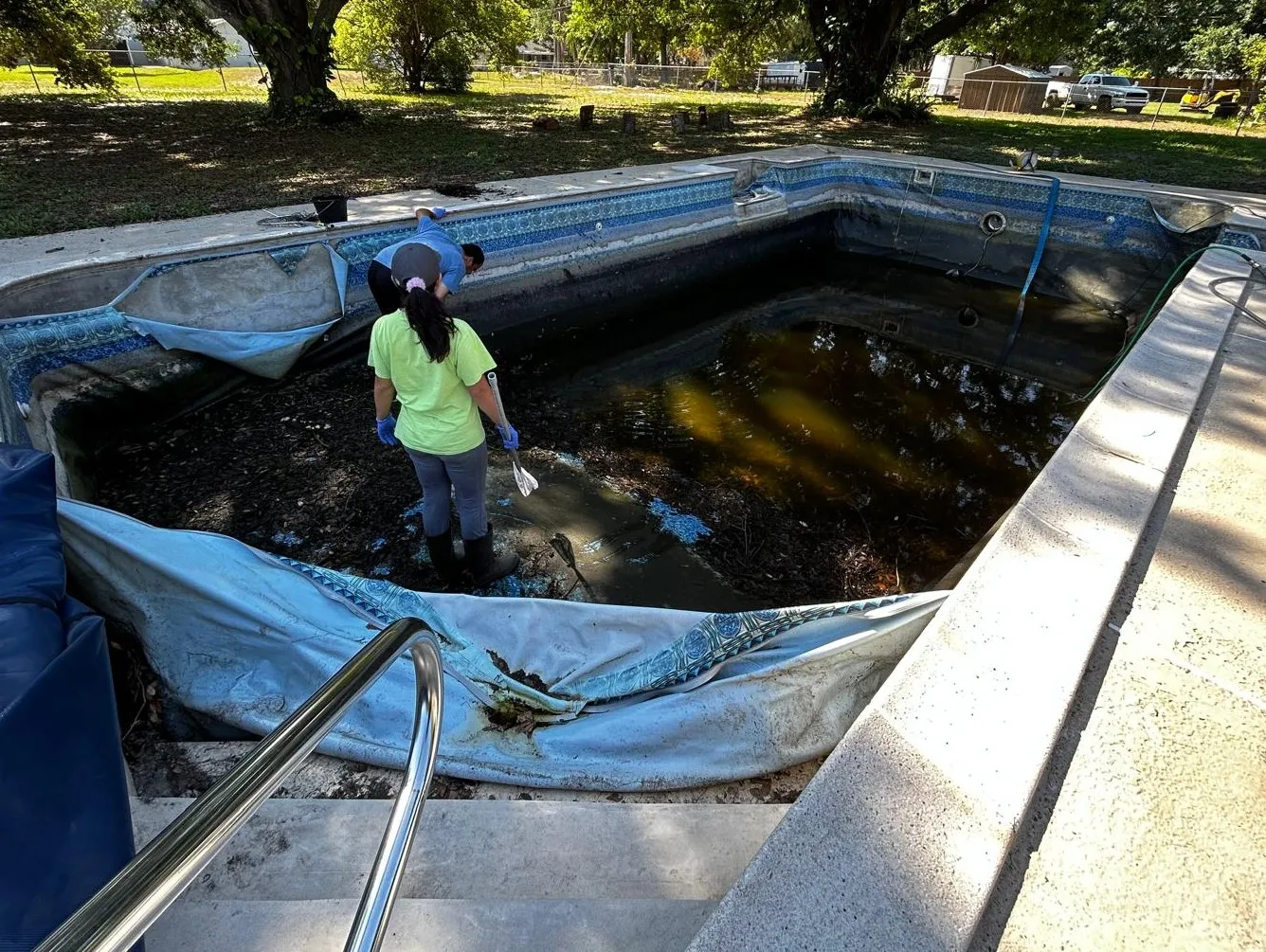
The whole family had to step into the pool area to help with the process. My mother, who came from Brazil to visit us, rolled up her sleeves and helped a lot in transporting the captured fish to the aquarium.
The scenario got really complicated when the water level hit the deepest layer. Instead of coming to the surface, the fish started burying themselves in the thick, black mud that covered the bottom. There was so much accumulated dirt. Every single centimeter of water lost made visibility drop to zero, making it even harder to get them out of there.
Between desperation and laughter
This rescue operation mixed moments of real desperation with very funny situations. We were all covered in mud, racing against time and against the pump that was draining the water. We tried to save every single one of them, but it was an uphill battle.
Some fish unfortunately didn’t survive the stress of the rescue, and others ended up dying later during the adaptation process to the new environment. It is a painful outcome, but understandable given the shock of moving from a wild ecosystem to a controlled environment.
Today, the survivors are doing great in the aquarium on our back porch. Fully adapted yet still wild, they handle the heat, the cold, and everything that comes their way on our porch, because even though the aquarium is in a covered area, it is still outdoors. They became a living part of our history in this house and a constant reminder that nature always finds a way, even under a forgotten pool cover.
The pool was finally ready, clear of mud and without the fish, ready to receive the new liner. But the renovation was far from smooth sailing.
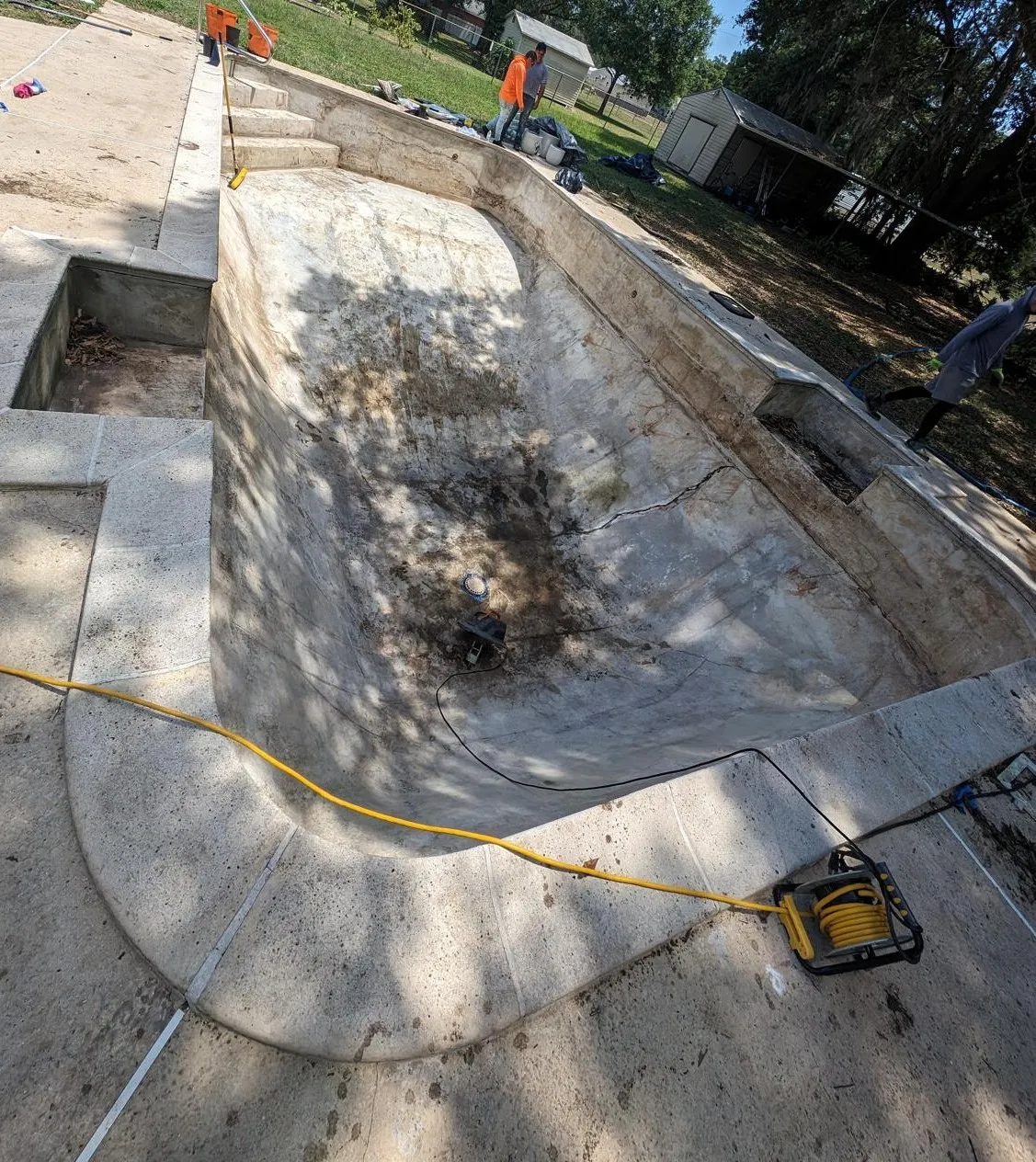
In the next article, I will share the chaotic mess we faced with the pool company, who messed up the size of the new liner and forced us to redo the work after the pool was already more than half full of water.