
Breathe easy: The best air-purifying plants for a work-from-anywhere home
Since the pandemic, our homes are both sanctuaries and offices. Discover how the best air-purifying indoor plants clear the air and boost your daily mood.
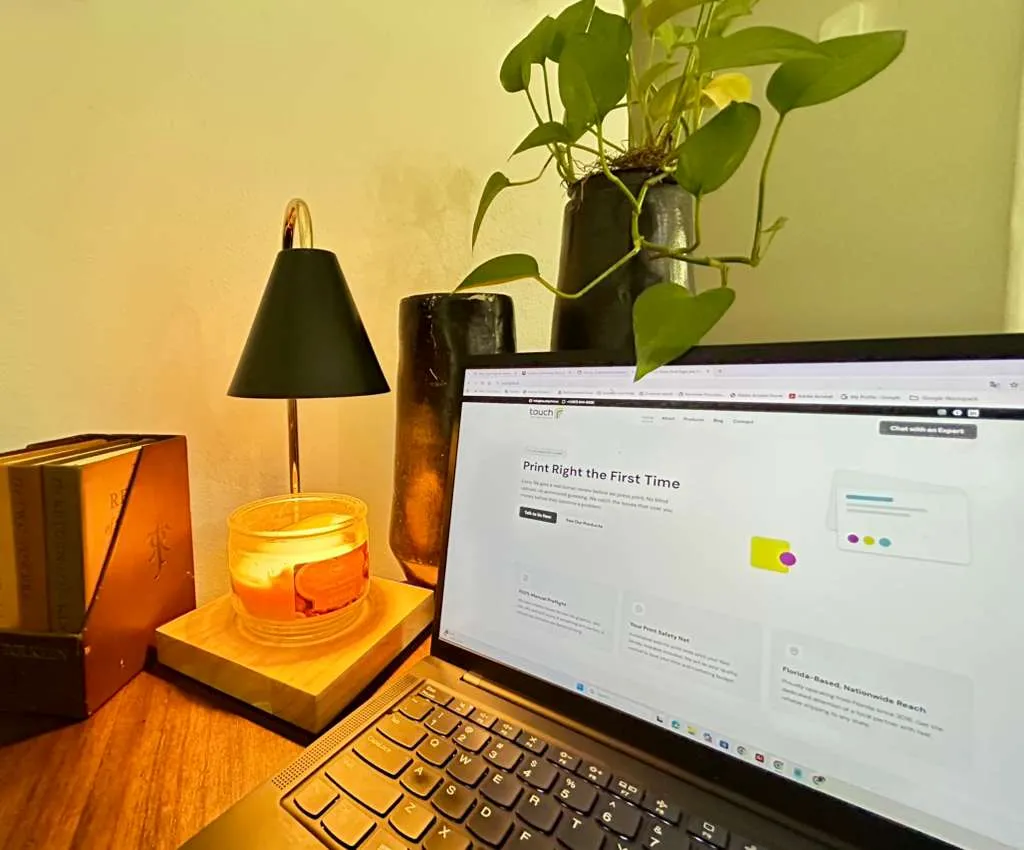
I don’t have a traditional, locked-door home office. Like a lot of people since the pandemic, my workspace changes depending on the time of day. Sometimes I answer emails at the dining table, take meetings at the kitchen counter, and answer clients on WhatsApp sitting on the living room couch. I move around constantly to keep my energy up, but staying inside all day comes with a hidden downside.
Our homes are no longer just places to sleep and unwind. They are our sanctuaries, our rest zones, and our full-time offices. When you spend all day locked inside with the air conditioning or the heater running, you breathe recirculated air for hours on end. By mid-afternoon, it’s incredibly easy to feel mentally drained, physically sluggish, and hit by a sudden lack of focus.
Plants are the perfect, natural bridge between a relaxing home environment and a productive workspace. Adding air-purifying indoor plants around your house physically cleans the air you breathe while completely shifting the energy and mood of your rooms.
The Science of Air-Purifying Indoor Plants
It’s common to think of air pollution as an outdoor problem, something involving car exhaust, construction dust, or city smog. The reality is that indoor air quality is often significantly worse than the air outside.
Take a good look around your living room, kitchen, or wherever you setup your laptop today. You probably have a manufactured couch, painted walls, synthetic area rugs, and MDF or laminate cabinets. These everyday household items slowly release Volatile Organic Compounds (VOCs) into the air through a quiet process called off-gassing. We are talking about invisible chemicals like formaldehyde, benzene, and trichloroethylene. When you breathe these compounds in for hours at a time, they cause real, measurable physical symptoms like low-grade headaches, eye irritation, and afternoon fatigue.
Back in 1989, NASA conducted a famous Clean Air Study to figure out how to clean the air inside sealed space stations. They found that common houseplants actively absorb these harmful toxins through their leaves and root systems. The plants essentially break down the chemicals, turn them into food for their own survival, and release fresh, clean oxygen back into the room.
You don’t need to live in a high-tech space station to use this natural setup. Placing a few tough, resilient plants in the specific areas of the house where you spend the most time creates micro-climates of fresh air right where you sit.
Beyond Oxygen: Plants Shift Your Mental State
The benefits of bringing greenery inside go far beyond filtering out invisible chemicals. Plants do something profound to our mental health, especially when the lines between your professional life and your personal life get blurry.
Humans have an innate desire to connect with nature, a psychological concept known as biophilia. When we stare at bright computer screens all day under harsh, stagnant indoor lighting, our stress and cortisol levels naturally rise. Having a piece of the living world in your peripheral vision acts as a visual anchor. It gives your eyes a place to rest and softly reminds your nervous system to calm down.
Taking a quick two-minute break to check the soil of a plant on your dining table or mist some leaves is the perfect mental reset. It forces you to step away from your digital life, put down your phone, and touch something real. That small, tactile interaction cleanses your mental palate.
The data backs this feeling up perfectly. Researchers at the University of Exeter found that adding plants to lean, sterile spaces increases productivity, focus, and overall well-being by 15%. People simply feel better, react calmer, and stay sharper when there’s a green leaf nearby.
My Top Plants for a Work-From-Anywhere Home
You need plants that can handle real life, meaning they won’t shrivel up and die if you get completely overwhelmed with work and ignore them for a week or two. Skip the delicate varieties and scatter these reliable survivors around your house.
Pothos (Devil’s Ivy)
If you look at the header photo at the top of this article, you’ll see my own Pothos sitting right next to my laptop. It’s the ultimate companion for someone who works all over the house. It grows incredibly fast, looks stunning, and is one of the absolute best choices for filtering airborne toxins out of stagnant rooms.
I love the Pothos because it communicates with you clearly. It’ll tell you exactly when it’s thirsty by letting its green, heart-shaped leaves slightly droop. Give it a thorough drink in the kitchen sink, and within a few short hours, the vines perk right back up. You can let it trail beautifully off a high bookshelf in the living room or sit it right next to your coffee cup while you work at the dining table.
The ZZ Plant: A Personal Propagation Journey
The ZZ plant (Zamioculcas zamiifolia) is an absolute champion for the darker corners of your house where other plants refuse to grow. It features thick, shiny leaves that look almost fake because they are so structurally perfect and waxy. While the standard green version is great, I highly recommend hunting down the ‘Raven’ variety. It has incredible, dark purple-black foliage that adds a moody, modern look to any space.
I have a very unique, personal bond with my ZZ plants. Back in late 2021, I was walking through a supermarket and noticed two stray, abandoned leaves sitting entirely forgotten at the bottom of a shopping cart, one green leaf and one black leaf. Instead of letting them get thrown away, I pocketed them, took them home, and buried them straight into a small pot of moist soil.
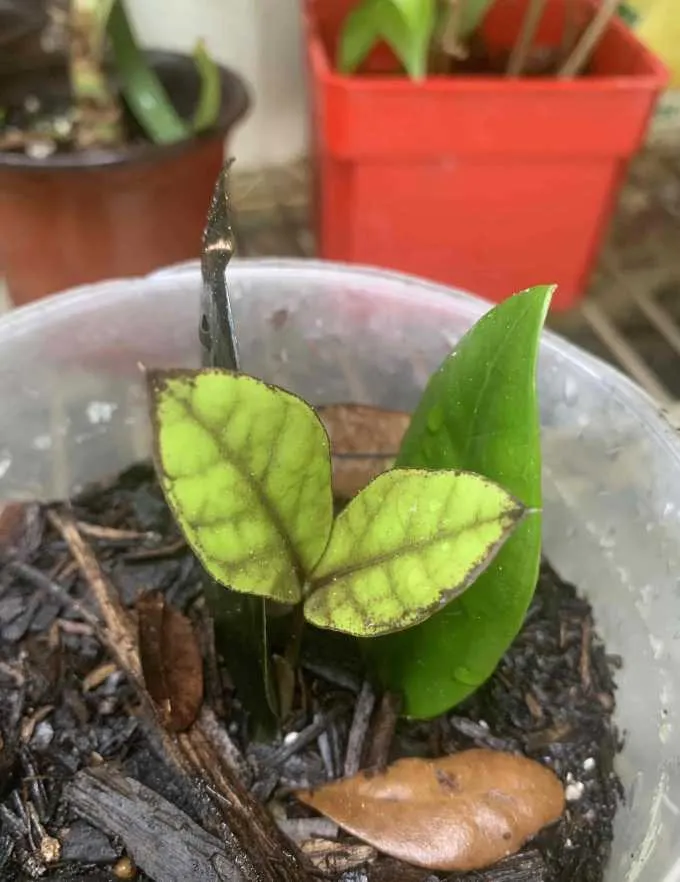
If you ever try to propagate a ZZ plant from a single leaf, you need to brace yourself for extreme patience. It is a slow, grueling process. For about five months, absolutely nothing happened above the surface while the leaves were quietly developing their underground water-storing rhizomes. But eventually, tiny, fragile shoots emerged (like you can see in my photo above), and they have been growing into a beautiful, steady plant ever since.
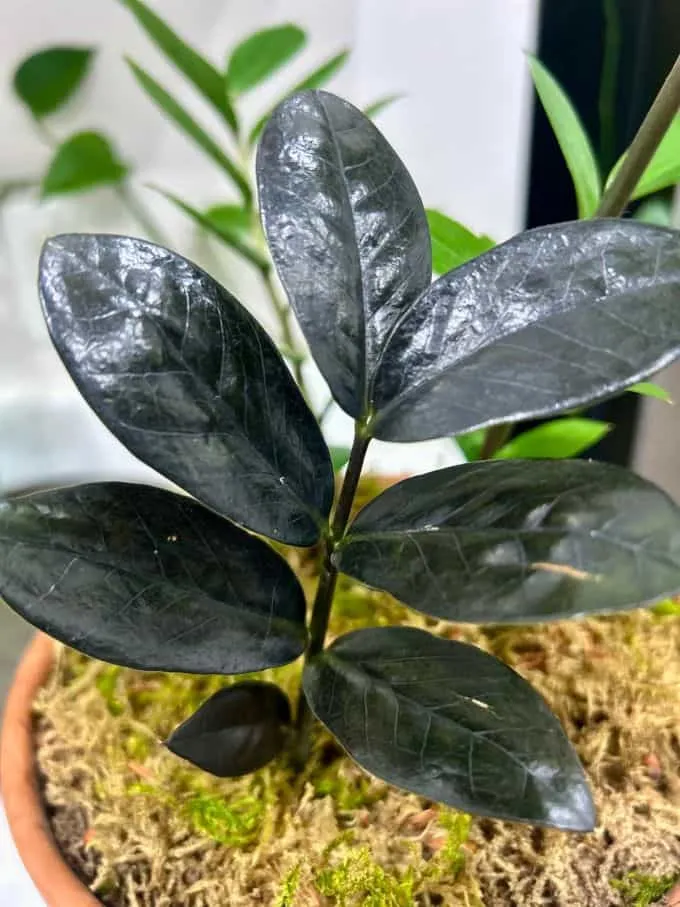
Because it grew from absolutely nothing, this plant is a great reminder of resilience when I’m working through a tough business day. It thrives on total neglect. I only water it a few times a year, and it handles low-light spaces like a champ. It pushes out new stems that start bright green before slowly turning that deep, midnight black color. When I feel creatively blocked or tired, I look at those dark leaves and remember that good things just take time to grow.
Dracaena fragrans (Corn Plant)
If you read about this plant on generic gardening websites, you might see pictures of it producing large, highly fragrant flowers. Let me save you the anticipation right now: if you keep it in a pot indoors, it’s probably never going to flower.
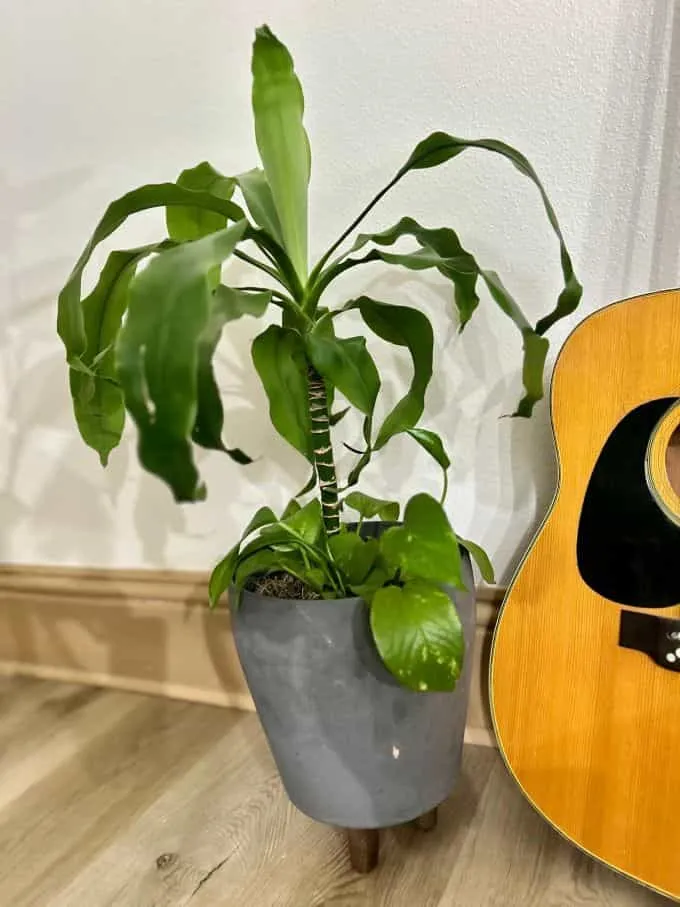
I have a potted Dracaena standing in my living room. It grows incredibly slowly, it has never given me a single bloom, and it completely loves its routine. I even planted a small Pothos cutting at the very base of the pot, and the two have become great roommates, sharing the same soil and looking fantastic together.
This low-stress setup is perfect for a busy household. The Dracaena gives you a beautiful, structural, miniature palm-tree look without any high-maintenance drama. It’s ridiculously easy to care for and barely needs any water. You can let the soil dry out completely, ignore it for three weeks, and it’ll still look healthy and vibrant. Plus, it’s a powerhouse from the NASA study, constantly pulling toxins like xylene out of your living room air while you relax or answer late-night client messages on the couch.
Skip the High-Maintenance Divas
I need to be completely honest with you here. Don’t buy a Calathea or a Fiddle Leaf Fig for your house if you actually want a stress-free environment.
Many people see gorgeous, perfectly staged pictures of these plants on social media and buy them to spruce up their workspace. I’ve tried it myself, and it almost always ends in frustration, guilt, and dead leaves. These specific varieties demand constant high humidity and absolute perfection when it comes to lighting and watering schedules.
Your air conditioner or heater will dry out a Calathea’s edges in a matter of days. You’ll end up staring at brown, crispy, dying leaves while you’re just trying to focus on your day. Save the tricky plants for a humid outdoor patio or a specialized greenhouse. Keep the inside of your house entirely stress-free.
Bring Nature Indoors
Take a look at the rooms you use the most throughout your day. Pick a spot for a new plant that sits away from direct AC vents or heaters, since cold and hot drafts dry out potting soil incredibly fast and shock tropical varieties.
Go to your local nursery this weekend and pick up a sturdy Pothos vine or a ZZ Plant. Put it in a heavy ceramic or concrete pot so you don’t accidentally knock it over with your. You’ll be amazed at how quickly that small touch of living nature transforms the energy, air quality, and productivity of your home.